

Wax up, strap on the leash, and click in the fins. Everything we need to go catch some waves was crude oil in a previous life. The foam, the resin, the wax, the leash cord, the fin boxes, and the fins themselves. Even the velcro on the ankle cuff was black gold at some point. How much petroleum actually goes into a fully kitted surfboard?
The biggest fossil fuel user is foam. A shaped 6’2” shortboard holds roughly a kilogram of foam. Both ingredients that make polyurethane foam, the polyol and the isocyanate, come from crude oil or natural gas. About a quarter to a third of the original blank never even makes it into the board, and even though it gets planed and sanded off during shaping, it still had to be produced to make the board.
The resin is the other heavyweight. A standard comp-glass shortboard soaks up about 1.2 kg of polyester resin across the lamination coats and the sanding coat. Also petroleum-based, styrene and polyester are both refined from oil. The fiberglass cloth, the stuff most people assume is the environmental villain due to its pervasive itchiness in insulation form, is made from melted sand and minerals. The stringer running down the middle is wood. Those two are about the only parts of your board that didn’t come out of an oil well.
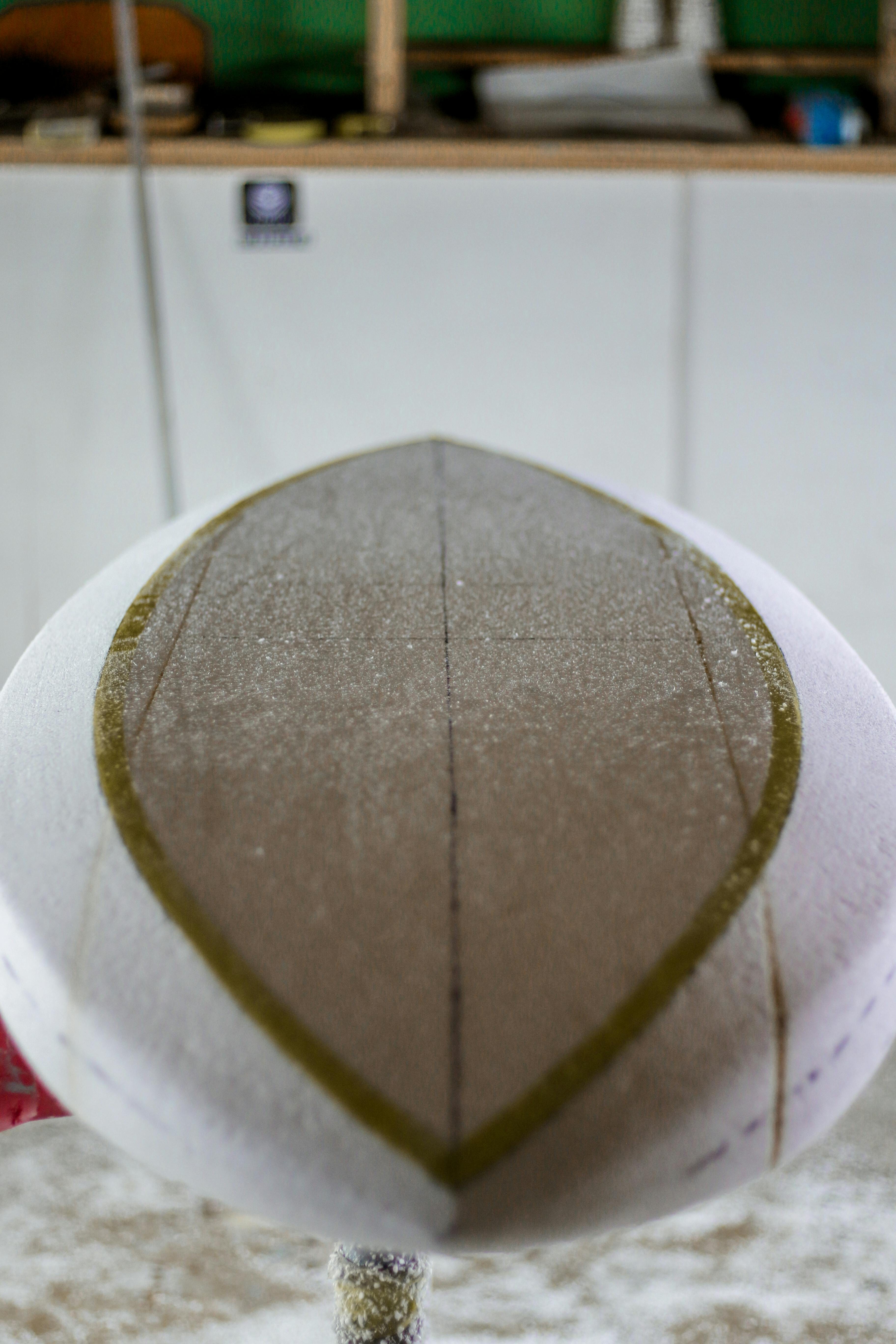
Then there’s everything you bolt or stick onto the board. Fin boxes are plastic. A thruster set, made from about 200 grams of fiberglass-reinforced nylon, is roughly 70% petroleum by weight. The leash cord is urethane and the cuff is neoprene and nylon. Surf wax is paraffin, which is a direct byproduct of crude oil refining. If you run a traction pad, it’s likely EVA foam. The accessories don’t weigh much individually, but they add a few hundred grams of petroleum on top of the board.
Add it all up and a shortboard contains roughly 2.7 kg of petroleum-derived material. To produce those 2.7 kg of finished plastics and resins, you need an estimated 1.3 to 1.6 gallons of crude oil as feedstock. But raw materials are only part of the story. According to a lifecycle study by Sustainable Surf using data from Channel Islands and Firewire, a standard poly shortboard produces around 48 kg of CO2 from blank to surf shop. Manufacturing energy, running the shaping bay, heating resin, ventilation, is actually the single biggest contributor to that footprint.
For context, a petroleum-based neoprene wetsuit sits in roughly the same ballpark, somewhere between 55 and 77 kg of CO2 per suit depending on the study. Similar footprint to a board on a per-unit basis, but wetsuits wear out much faster unless you’re snapping your board yearly. Boards can last to double digit years if you take care of them. Over a five-year window, a surfer who replaces a wetsuit every 18 months racks up far more petroleum consumption than someone riding the same board the whole time.
The 48 kg of CO2 per board sounds like a number worth caring about until you compare it to getting yourself to the surf. A one-way flight from LAX to Honolulu puts roughly 280 kg of CO2 into the atmosphere per passenger. One surf trip to Hawaii wipes out the carbon math of about six surfboards.
The only scientifically valid reason for Locals Only.
Further Reading: