

Short period swells with some size have been really fun lately. If only they stuck around as long as the longer periods.
A 17-second North Pacific groundswell can hold waves at the coast for a week, the dominant period stepping down a second or two each day. A 9-second windswell can show up and be flat within a day or two. The difference between the two has to do with the generation offshore rather than anything at the break itself.
Wind dragging on the ocean surface starts by making short, choppy waves at the top of the spectrum. That wind blowing over a big enough patch of ocean works the surface into longer, bigger waves. A 20-second peak only emerges after days of sustained generation. Shorter storms only output shorter periods.
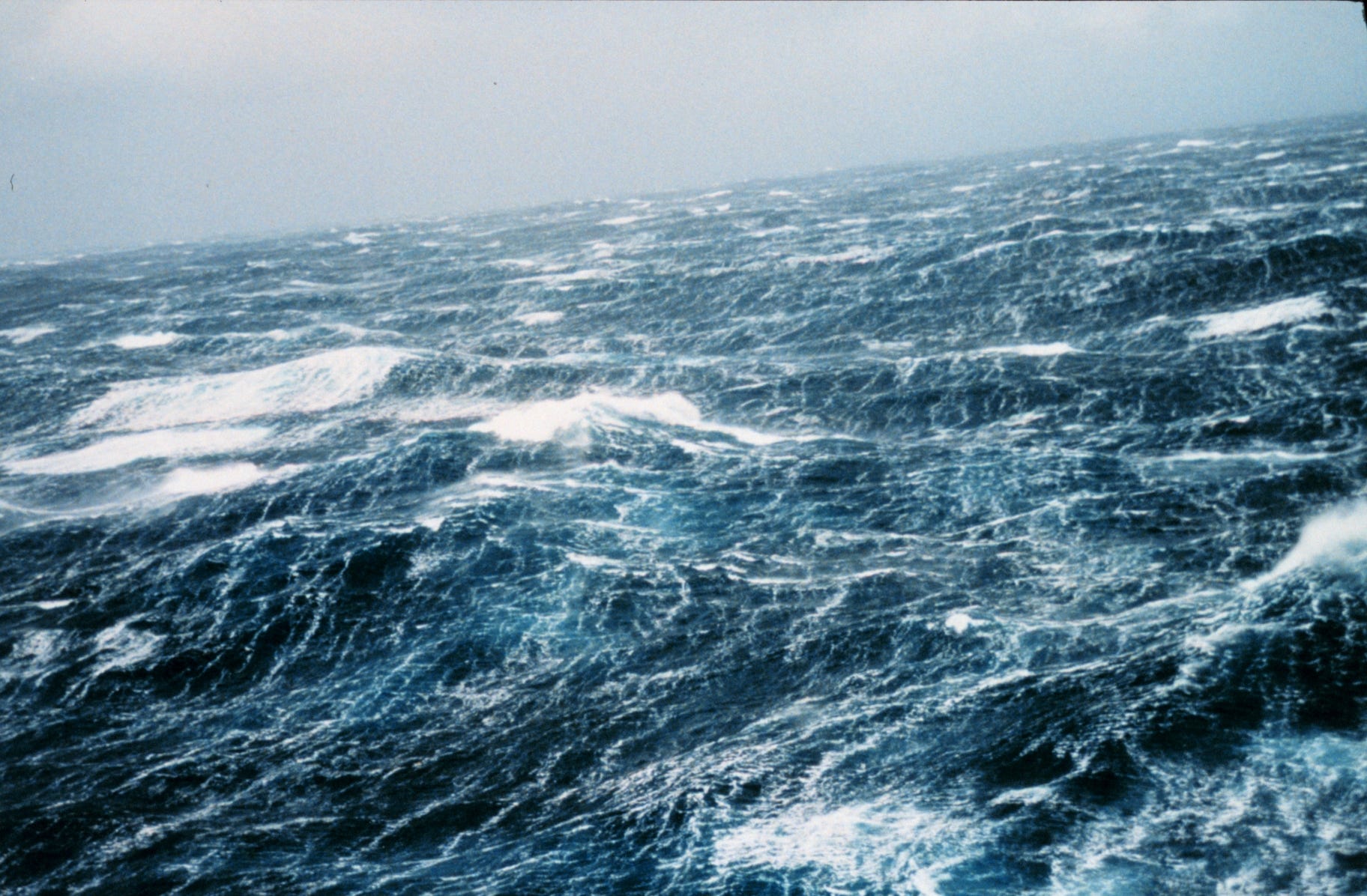

Back to the big storm: while the long end of the spectrum fills in slowly, the wind is still making 14-second, 12-second, 10-second, and shorter waves at the same time. We talk about “an 18-second swell” because that’s the dominant period at the buoy, but the whole mess is leaving the storm together.
Walter Munk’s 1963 work tracking Southern Ocean swells to Alaska showed how dramatically period controls travel speed in deep water. A 20-second wave moves at about 35 mph, but a 10-second wave moves at just half that. The further the waves travel, the more they spread out in time. Because of this, a storm 4,000 miles offshore sends its 18-second leading edge to the buoy more than a day before the 12-second component arrives.
But when the buoy reads 8 to 10-second primary with no long-period leading edge, we can expect a shorter run of swell. The storm didn’t blow long enough or over enough fetch to develop the longer period swell, so there is a smaller window of time to surf it. Short-period waves also dissipate much faster as they travel. The longer end of the wave spectrum crosses a basin without much energy loss, but the short stuff burns itself out within a few hundred miles. Most short-period swells at the coast are generated locally in the past day or two, not days to weeks before like the long period.
The one exception is a productive storm that sits close to the coast. North Pacific lows in winter sometimes track right past California, throwing 15 to 17-second swell from a few hundred miles offshore. The storm still had to last long enough to make those periods, so the spectrum is still there. But without much ocean distance to do the dispersion sorting, the longer and shorter components arrive bunched together. The event fires for a day or two and disappears. There are plenty of waves, just no slow tapering tail. Gotta get ‘em while they’re hot.
Further Reading:
I am concerned that a sea full of floating wind farms (as planned for the North Sea and elsewhere) is capable of messing up surfing waves. See https://doi.org/10.5194/gmd-17-4891-2024