

The Atlantic runs about 1-2 parts per thousand saltier than the Pacific. That sounds like a rounding error, but it’s consistent across the entire basin and has held for as long as we’ve been measuring it. With the oceans connected, how is this possible?
Salt gets into the ocean through river runoff and seafloor vents, and then it just stays. Evaporation pulls water out of the ocean and into the atmosphere, but salt doesn’t evaporate. It’s left behind. Rain adds freshwater back to the surface, diluting what’s there. So salinity is a ledger of how much freshwater a basin has gained or lost relative to its salt content. More evaporation than rainfall means saltier water. More rainfall than evaporation means the opposite.
The Atlantic loses more water to the atmosphere than it gets back from rain. The Pacific is wetter — precipitation outpaces evaporation across most of the basin. That alone would explain the difference. But the more interesting part is where the Atlantic’s evaporated water actually goes. Trade winds blow westward across the tropics, and the Central American isthmus is narrow enough (about 80 kilometers at its narrowest) that significant amounts of water vapor cross it in the atmosphere. The Atlantic is effectively exporting its freshwater to the Pacific through the air. Researchers estimate this cross-isthmus moisture flux moves on the order of 0.1 to 0.2 sverdrups of freshwater equivalent annually (100k-200k cubic meters per second - an absurd number), enough to matter over ocean timescales. The Atlantic loses salt-free water and gets saltier. The Pacific receives it and gets fresher.
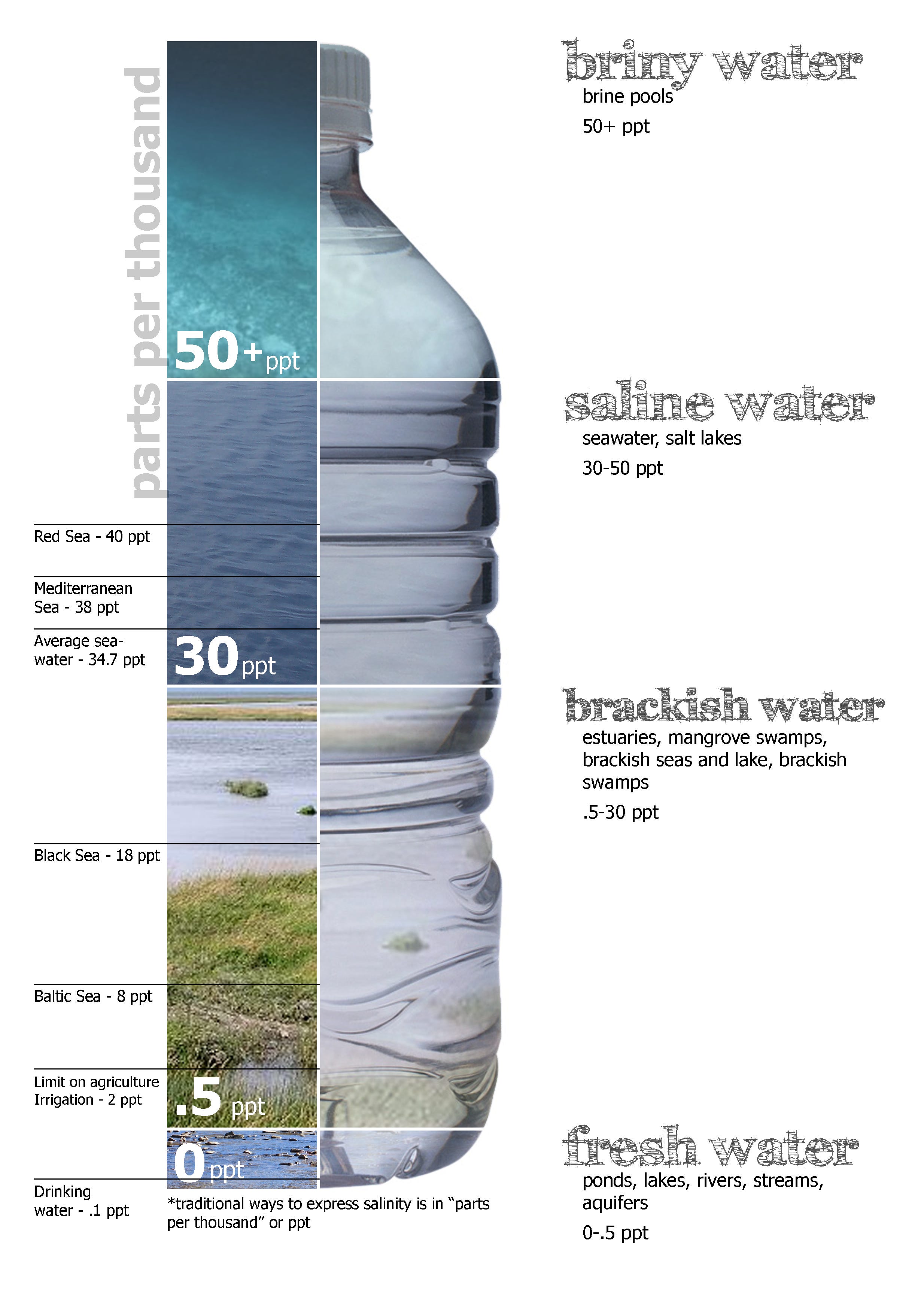
The Atlantic connects to the Mediterranean Sea through the Strait of Gibraltar, and the Mediterranean is hypersaline. Intense evaporation and limited inflow from rivers make it one of the saltiest major bodies of water on earth, averaging around 38 parts per thousand. The dense, salty Mediterranean water sinks and spills westward into the Atlantic at depth through the strait, a slow but persistent input of high-salinity water. The Pacific has no equivalent. Nothing comparable is pouring extra salt into it from an adjacent basin.
The Indian Ocean sits in between, averaging around 34.5-35 ppt, but masks a wild internal range. The Arabian Sea runs closer to 36-37 parts per thousand because evaporation is high and few rivers drain into it. The Bay of Bengal, on the other side of the subcontinent, drops to 32-33 ppt because the Ganges, Brahmaputra, and monsoon rainfall pour freshwater in faster than the ocean can salt it back up. The Red Sea and Persian Gulf, both hypersaline, spill dense water into the Indian Ocean at depth the same way the Mediterranean does for the Atlantic, but the Bay of Bengal offsets it. Each basin ends up where its geography, rainfall, and neighbors leave it.
Saltier water is denser, so you float marginally higher in the Atlantic than the Pacific, but you’d never notice it. Your wetsuit has more effect on your position in the water than a 1.5 ppt salinity difference does. Two connected oceans ended up with different salt content because of where they sit, what sits next to them, and which way the wind blows.
Further Reading: