

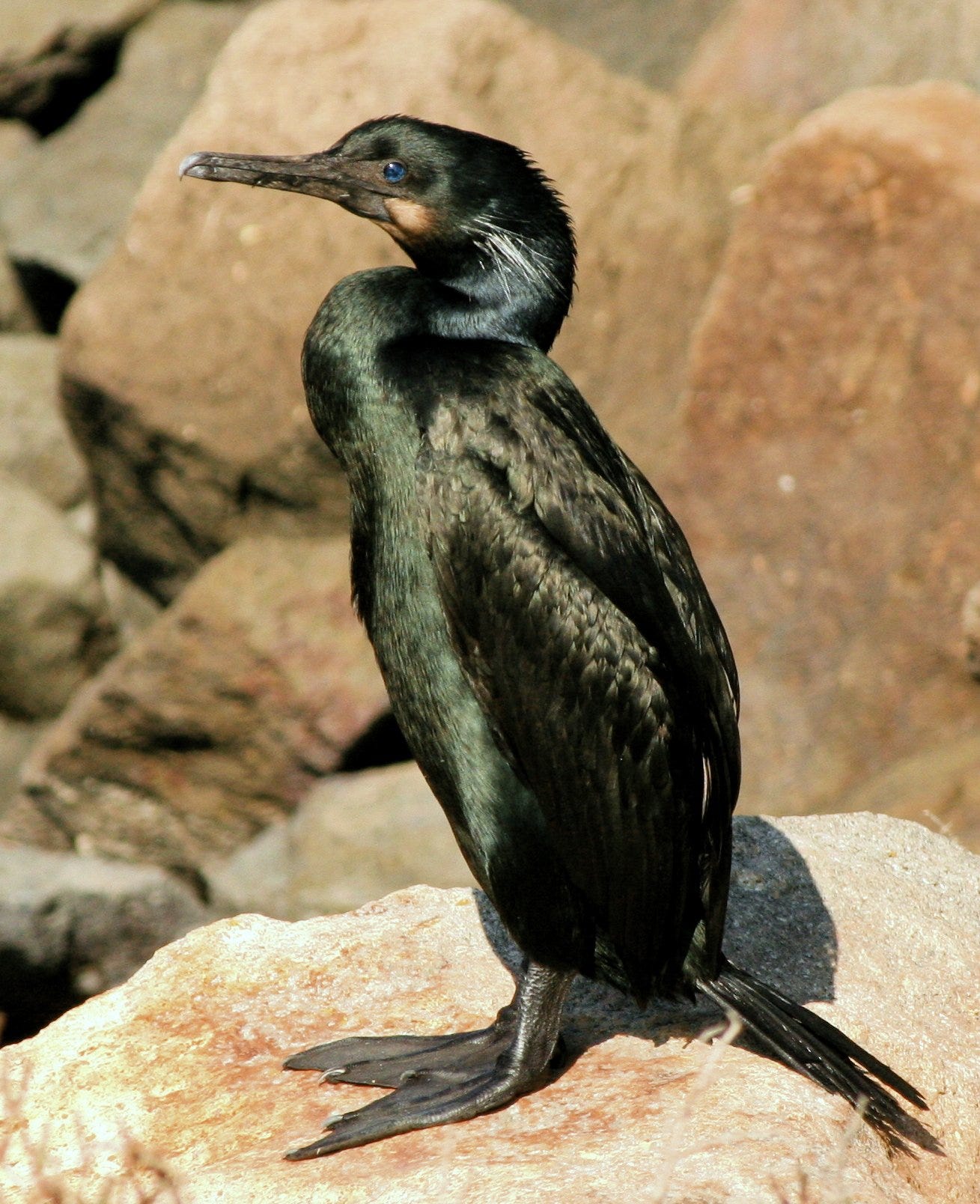
Recently, Brandt’s cormorants have been walking up to people on California beaches, an odd behavior for these birds. The ones approaching beachgoers in San Diego County right now are mostly juveniles too weak to flee, often within a day or two of dying. SeaWorld San Diego has been fielding four or five rescue calls a day since February and had taken in more than 115 birds by mid-April. This has been happening all the way up to Mendocino County.
California Department of Fish and Wildlife confirmed in late March that starvation, not avian flu, is the primary cause. Brown pelicans and common murres are dying alongside the cormorants, almost all of them young birds in their first year. 2025 was an unusually strong breeding year for these species, which means a larger-than-usual cohort of juveniles is now competing for whatever food is available.
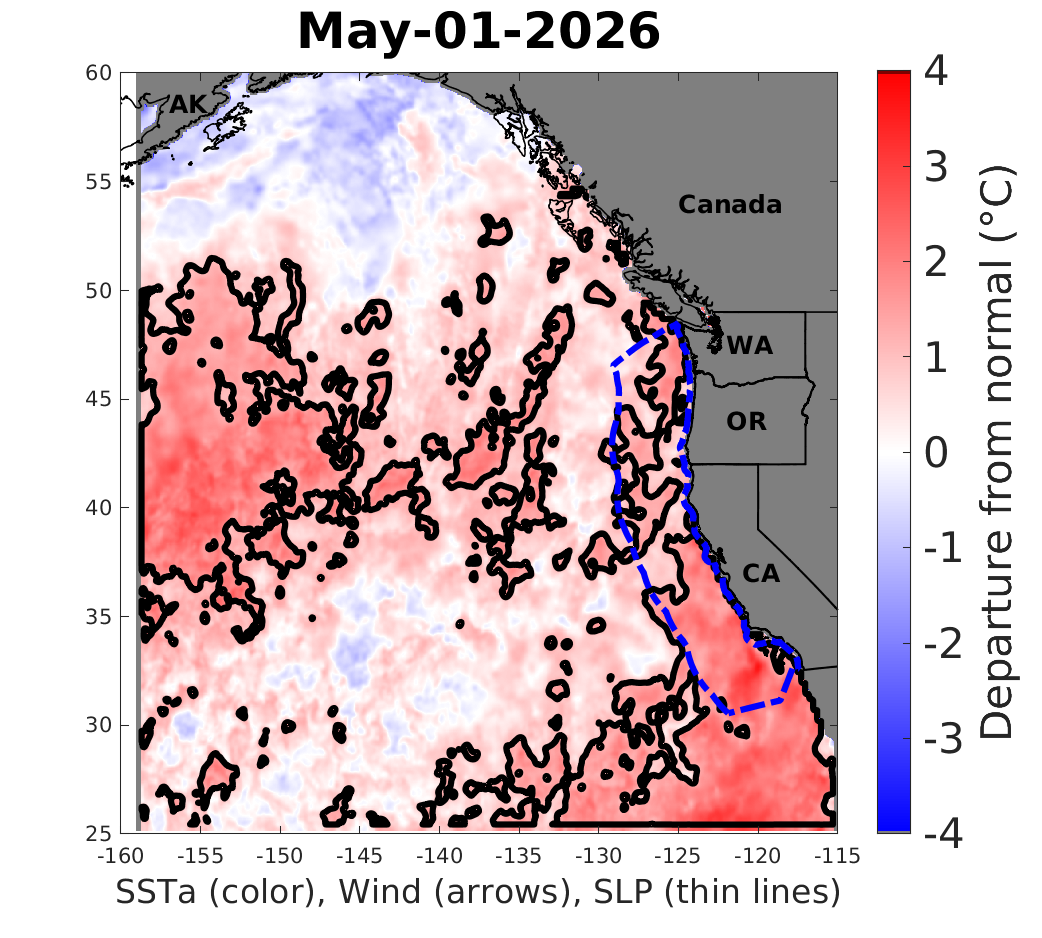
On September 9, 2025, the northeast Pacific reached the highest average temperature ever recorded in the basin: 20.6°C, nearly half a degree above any previous record. The marine heatwave responsible, designated NEP25A by NOAA, first emerged in the Gulf of Alaska that May and expanded through the summer to roughly 8 million square kilometers (about half a Russia), larger by area than any prior northeast Pacific heatwave on record. It shrank through October and November, then swelled again along the coast in December. As of early 2026 it persists, with an El Niño developing on top of it.
Warm surface water pushes anchovy and sardine schools deeper into cooler layers, away from some seabirds’ reach. A brown pelican can only dive about six feet, so a small change is significant. Common murres can dive much further, hundreds of feet, but each dive is intensive and burns lots of calories. A juvenile that hasn’t dialed in its hunting yet runs its energy budget into the red trying.
Warm surface water also resists mixing with the colder water below it. That matters because the deep water carries the nutrients (nitrate, phosphate, silicate) that phytoplankton need to grow. Less mixing means less fertilizer reaching the sunlight, and phytoplankton, the base of the food web, runs short. The community shifts from large, fat-rich diatoms toward smaller dinoflagellates. Their predators, zooplankton, follow: warm-water copepods are smaller and carry less fat than the subarctic species they replace, so a fish eating the same number of copepods gets fewer calories. Krill hit an 18-year low in southern California during the 2013-2016 Blob. Pyrosomes, gelatinous tube-shaped colonies that are essentially low-calorie filler, proliferate and absorb energy that would otherwise have moved up the chain.
Each link in the chain loses calories. A fish eating smaller, leaner copepods gets less energy from a meal, and a cormorant eating that fish gets less still. The bird has to catch more fish to compensate, but the fish are deeper than they used to be.
The 2013-2016 Blob, the previous benchmark for this kind of event, killed roughly a million common murres and 400,000 Cassin’s auklets along the same coastline. NEP25A is bigger by area and now in its second year. The juveniles washing up this spring are the cohort that would have started breeding around 2029.
Further Reading: