

Waves arrive in groups because they’re born in groups. Storms generate waves across a range of periods simultaneously, and those waves interact with each other as they travel. The set-lull pattern you see from the beach is a direct consequence of how waves of slightly different frequencies add together.
Storms don’t produce uniform waves. Wind blowing over water generates a spectrum of wavelengths, periods, and directions all at once. The size of that spectrum depends on how hard the wind blows, how long it blows, and how much ocean it has to work with (called fetch). A massive North Pacific low spinning for days across a thousand miles of fetch creates waves spanning periods from 8 seconds to 22 seconds, all radiating outward from the storm center.
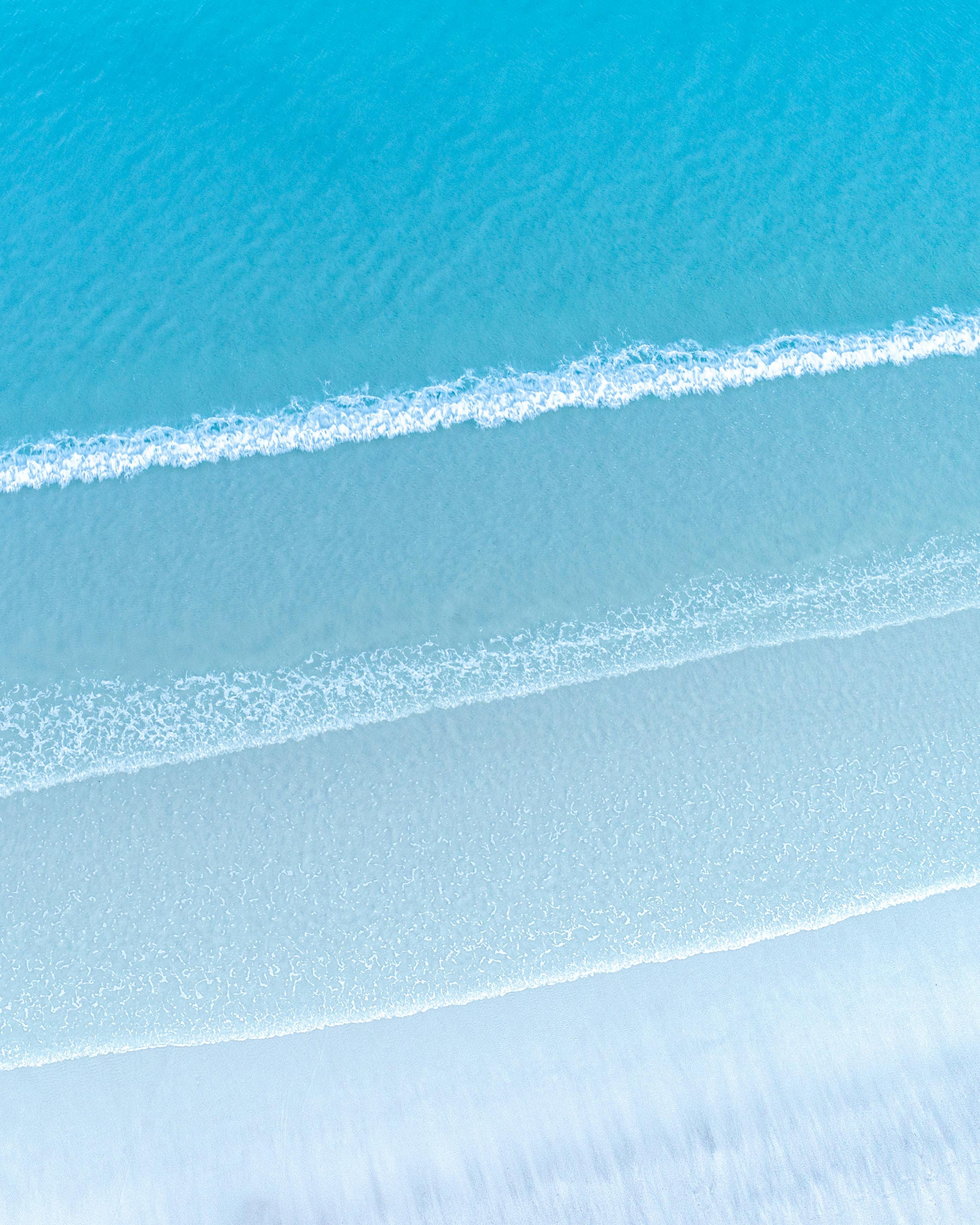
Once waves leave the generating area, they begin to separate. Wave speed in deep water depends on period, with longer period waves traveling faster. A 20-second swell crosses the Pacific at roughly 35 mph, while a 10-second swell moves at half that speed. Walter Munk’s 1963 documentary “Waves Across the Pacific” tracked this dispersion across entire ocean basins, proving that swells maintain their energy over thousands of miles while sorting themselves by period along the way. By the time waves reach your beach, they’ve organized from the chaotic spectrum the storm produced into something more orderly. The longest periods arrive first, with shorter periods trickling in over subsequent days.
But dispersion alone doesn’t explain the pulse of sets followed by lulls. That pattern emerges from interference between waves of slightly different frequencies traveling together.
When two waves with nearly identical periods overlap, their crests and troughs add together. Where crests align, the combined wave height doubles. Where a crest meets a trough, they cancel. The result is a beat pattern, an envelope of alternating large and small waves that travels as a group across the ocean. Add more frequency components and the pattern gets more complex, but the same idea holds. The set you’re watching roll through represents a region where wave components are reinforcing each other. The lull is where they’re canceling out.
The energy in these groups moves slower than the individual waves themselves. In deep water, group velocity is roughly half the phase velocity, which is the speed of the wave crests you actually see. Watch a set offshore and you’ll notice individual waves appear at the back of the group, travel forward through it, and disappear off the front. The waves are outrunning their own energy. What we perceive as a set is this slower-moving envelope of reinforced wave height, a moving magnifying glass of sorts.

How pronounced the set pattern appears depends on the bandwidth of the swell. A swell that’s traveled far has had time to disperse and narrow its frequency spread. These clean, long-traveled swells produce well-defined sets with obvious lulls between them. Local wind swell, with its broader mix of periods, creates choppier conditions where sets blur together. The narrower the frequency band, the longer the beat period and the more patience required between sets.
Set size and spacing depend entirely on the frequency content of the swell, which varies with each storm system and changes as the swell evolves. Some sets have two waves, others have eight. You can count them all you want, but it’s not going to tell you how many waves are in the set after next.
Further Reading:
A great read. Thanks for sharing