

About 90% of the global human population lives north of the equator. Ocean observations, for most of the history of oceanography, went where people were.
Instruments go where ships go, and ships go where commerce sends them. The Northern Hemisphere has the bulk of commercial shipping routes, research institutions, and national ocean monitoring programs. NOAA’s buoy network alone stretches from the Bering Sea to Hawaii and from the Gulf of Mexico to the North Atlantic, with over 100 moored buoys operating at any given time. The Southern Hemisphere has no equivalent, and ship-based measurements of temperature, salinity, and carbon dioxide have always reflected the routes ships actually travel. The global south has been measured mostly in passing.
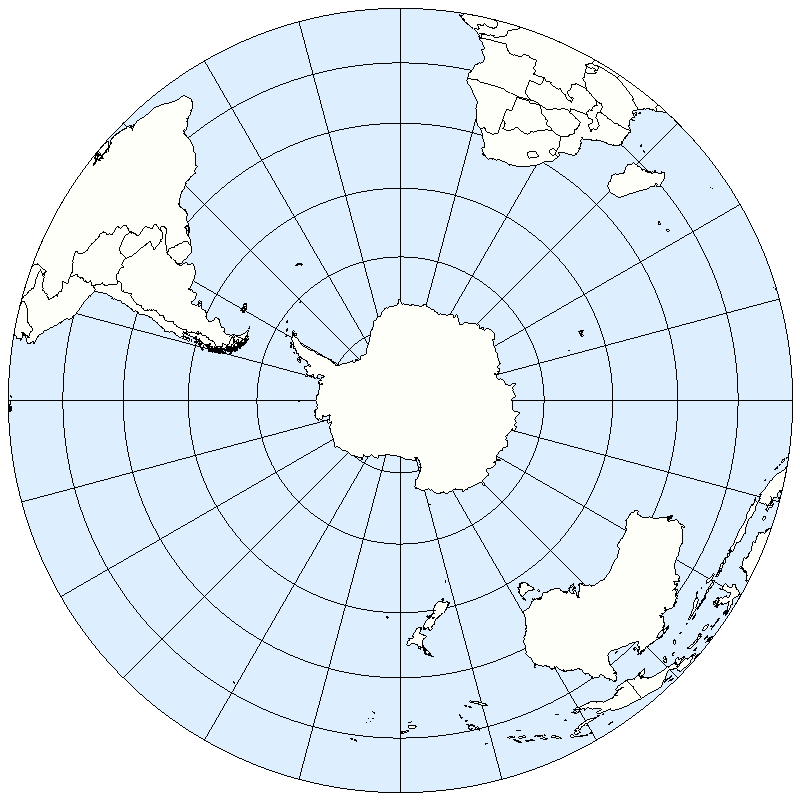

The South Atlantic, the South Pacific, and the Indian Ocean are all part of this story, not just the waters near Antarctica. The southern portions of every major basin have consistently thin coverage, with measurements collected opportunistically rather than systematically. The majority of ocean carbon observations come from routes that favor the Northern Hemisphere. The subtropics and tropics of the Southern Hemisphere are nearly as sparse as the subpolar regions.
The Southern Ocean represents the extreme case. For most of the 20th century, sustained in-situ observations there amounted to two sub-Antarctic moorings, one of which has since gone offline. Winter data were rarest of all, because research cruises don’t run in the Southern Ocean in winter. Nobody wants to be on a ship at 50°S in July. The consequence is that the entire pre-2000 Southern Ocean winter profile database contained less data than autonomous floats now collect there in a single year.
Being a connected ocean system and all, this undersampling biased what scientists thought they knew. Ocean heat content estimates for the Southern Hemisphere were running roughly 40% too low through much of the mid-20th century record, a finding that only became apparent once better observations existed to compare against. Models built on that incomplete historical record inherited the bias. Reanalysis products, which are ocean model simulations constrained by observations, are only as good as the data assimilated into them, and in the Southern Hemisphere, the data were thin in space and time and almost nonexistent in winter.
For wave forecasting, this creates a specific problem. The storm belts of the Southern Hemisphere, the roaring forties and furious fifties, are among the most energetic sea-states on the planet and generate swell that propagates across entire ocean basins. These are also the regions where numerical wave models have historically had the least in-situ validation data. A model’s error in representing a storm’s size, track, or intensity at 50°S doesn’t stay at 50°S. It propagates outward with the swell. Forecast uncertainty at the source becomes forecast uncertainty everywhere downstream.
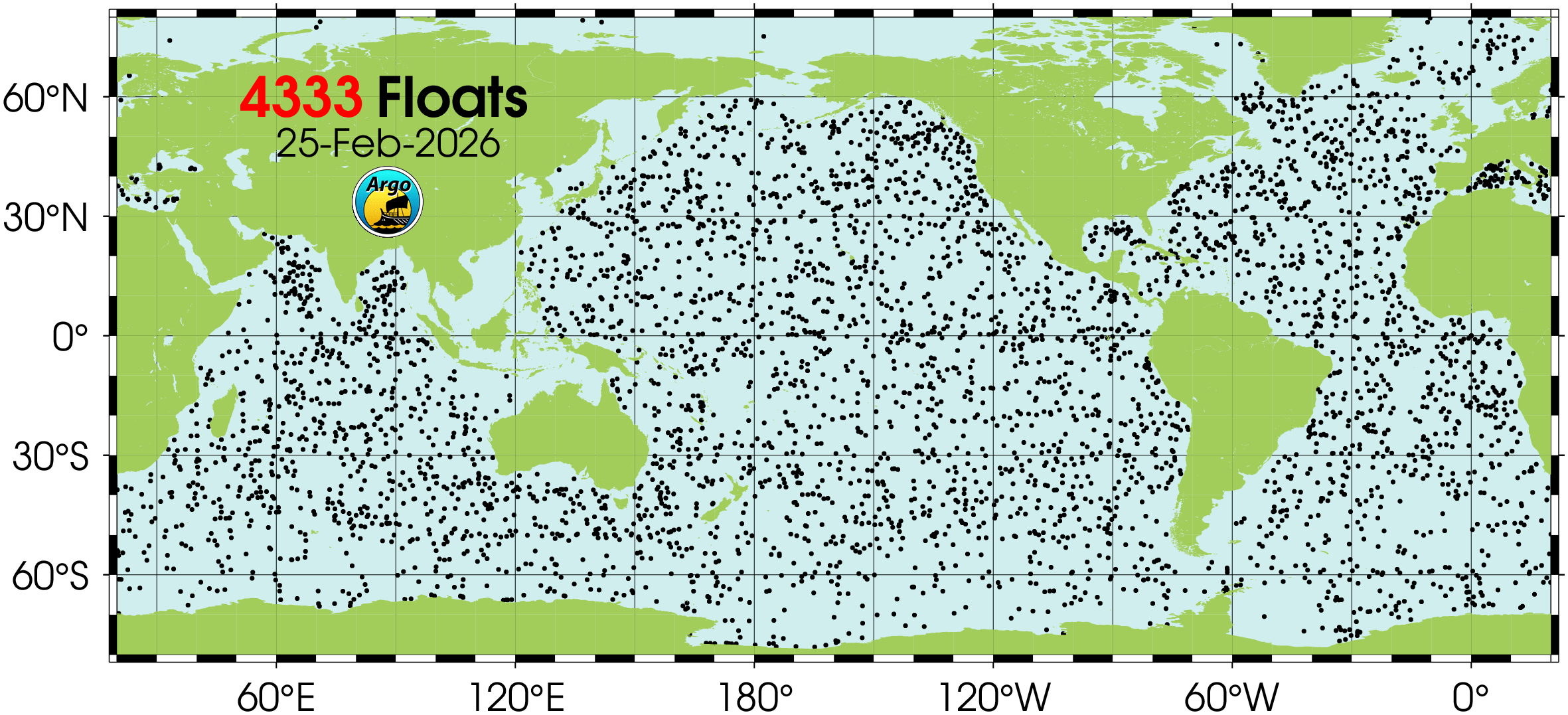
The Argo program, which began deploying profiling floats in the early 2000s, was the first instrument system to observe the Southern Hemisphere systematically and year-round. Argo floats don’t follow shipping lanes. They drift with ocean currents, park at depth for 10 days, and transmit data back at the surface regardless of season or sea state. By 2007 the array had achieved nominal global coverage. Southern Hemisphere ocean science effectively has a before-Argo and after-Argo era.
But, Argo floats can’t sample under sea ice or in shallow coastal waters. The deep ocean below 2,000 meters is still largely unobserved in the south. Biogeochemical measurements of carbon, oxygen, and nutrients require specialized sensors that only a fraction of floats carry. And the observing infrastructure that fills in around Argo’s gaps, the mooring arrays and coastal buoy networks that densify coverage in the North Atlantic and North Pacific, has no Southern Hemisphere counterpart of comparable scale. The baseline is better than it was. It’s still not close to symmetric.
Further Reading: