

Neanderthals didn’t surf (allegedly), but they had surfer’s ear. In 1911, French paleontologist Marcellin Boule documented bony growths inside the ear canal of a Neanderthal skull at La Chapelle-aux-Saints. Cool, but nobody thought much of it for over a century. However, in 2019, Erik Trinkaus and colleagues at Washington University examined ear canals in 77 ancient human remains and found the same growths in about half the Neanderthal skulls they studied. The likely explanation is that these Neanderthals were spending serious time in cold water, foraging rivers and coastlines for food.
The same growths have turned up in Homo erectus skulls and in Pre-Hispanic remains from coastal Gran Canaria, where archaeologists used their presence to figure out which individuals were the community’s designated swimmers. Surfer’s ear predates surfing by a species-wide margin.
What Boule found in that Neanderthal skull in 1911 is the same thing an ENT would find in yours after a couple decades of dawn patrols: new bone growing on the walls of the ear canal. Your skeleton slowly and permanently walling off the eardrum from the cold.
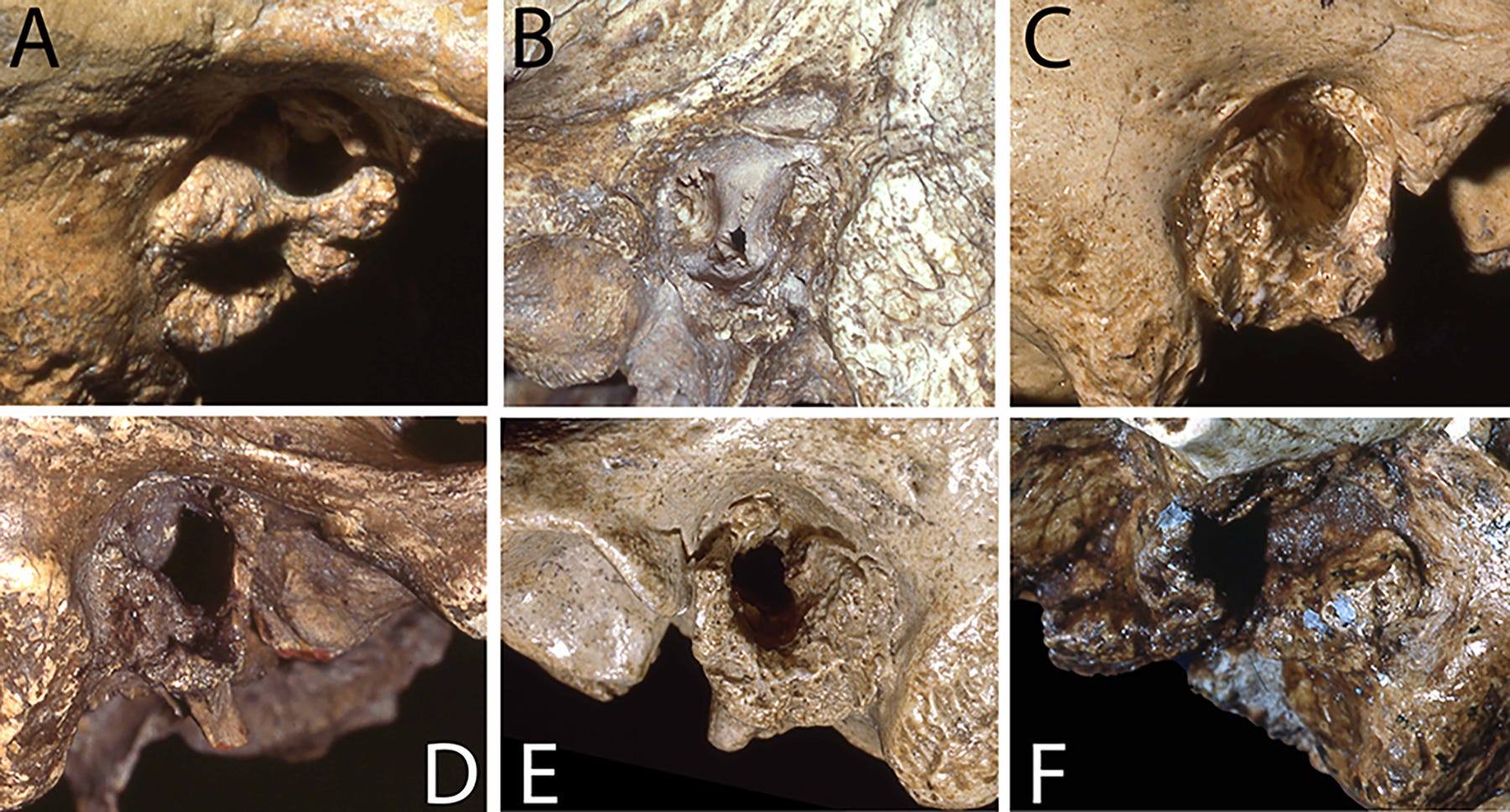
The tissue lining the ear canal sits almost directly on bone. When cold water floods in, blood vessels in that lining dilate, and the repeated cycle of cooling and inflammation triggers bone-producing cells to start laying down new layers. Over time, the body is narrowing the canal to protect the eardrum, which would be thoughtful if it didn’t also trap water and wax in there. Water below 19°C is the primary culprit, but wind-driven evaporative cooling allows warmer waters to lead to the same results. A study of surfers in Queensland, where the water barely dips below 20°C, still found exostoses in 70% of participants.
Most surfers don’t notice for a decade or more, which is why most diagnoses land in your mid-30s to late 40s. Water sits in your ear a little longer after sessions, then infections start showing up, then hearing goes. One ear is often worse than the other, depending on prevailing wind or which side of your head meets the wave first. All the more reason to surf lefts and rights, day and night.
The prevalence among surfers is pretty grim. A systematic review of roughly 3,000 surfers worldwide averaged around 68%. A smaller study of elite WSL competitors found it in every single one of them, and not one had ever worn ear protection.
Once bone grows, it doesn’t recede. Surgery is the only way to remove it, and it can grow right back with continued exposure. Earplugs and hoods keep cold water out of the canal and are the simplest way to slow the whole process down. If you’re like me, you should probably actually use the never-seen-water pair sitting in the bottom left corner of your trunk. So easy a caveman can do it.
Further Reading:
Very interesting.
I think I'll start wear earplugs now 👍
Along with bone growth, there's cold-water balance problems with age. Doing a swim in even 70ºF water can create balance problems such that getting out of the water can mean getting pushed over when that shouldn't happen. Getting back on my feet becomes difficult. Earplugs and/or hoods are great. I'm now in love with a 3mm hooded wetsuit, from San Diego of course, The rather high rate of hoodedness at southern California beaches isn't just a wet version of the fashion for hoodies.