

It’s well known that the poles are much colder than the equator, but some may not know why. I just surfed up in Big Sur with some friends and was that person that forgot their booties. After my claws thawed enough, I decided to write about why it’s so much colder up there than San Diego, where board shorts are back in the rotation.
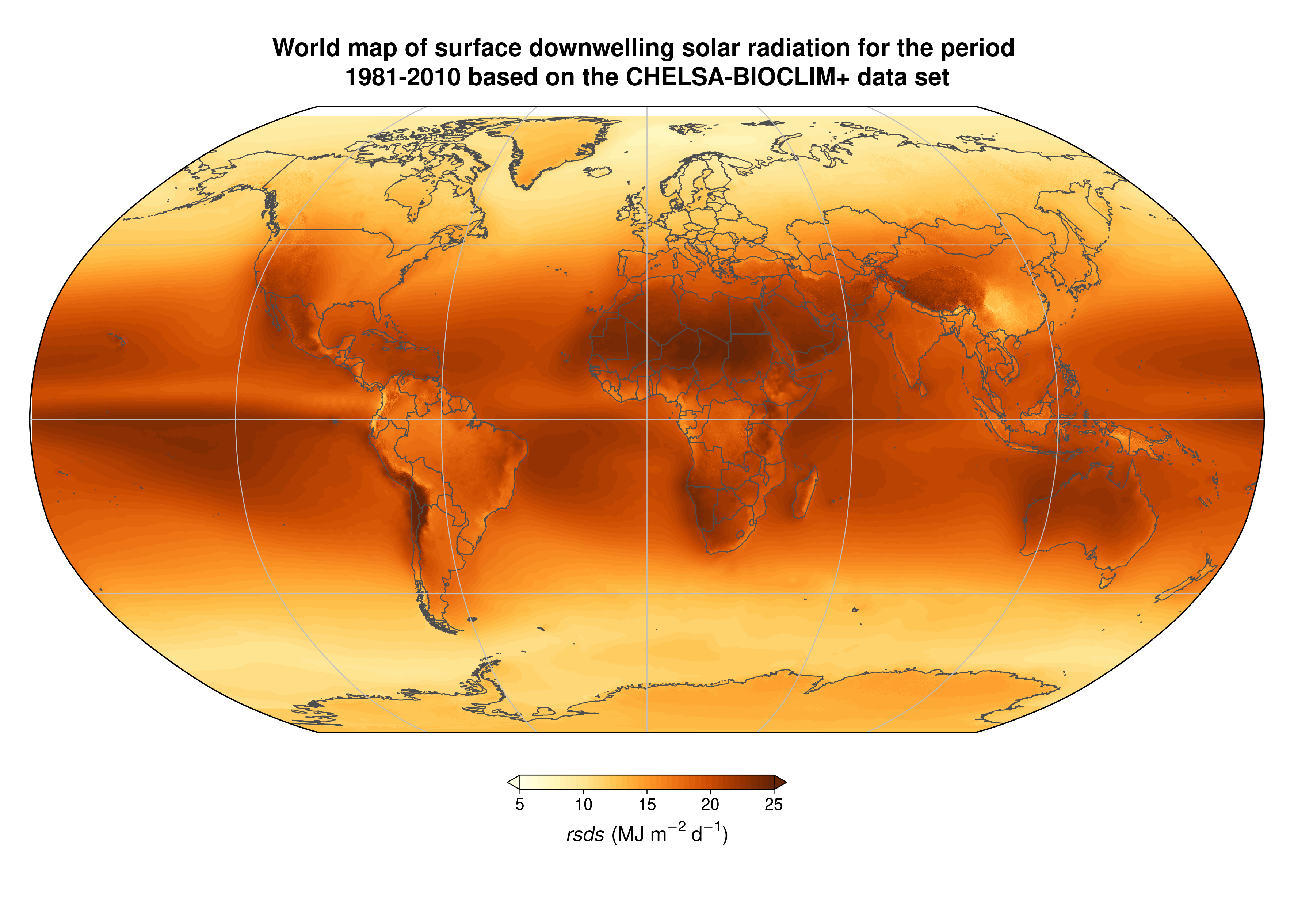
Sunlight arrives at Earth in parallel lines. Near the equator it lands close to head-on, and a beam of a given width warms a patch of ocean about that same width. Toward the poles, an identical beam comes in at a slant, spread thin across a much larger patch. Same energy and more area, so less heat per square meter of water. Averaged over a full year, the equator takes in roughly two and a half times the sunlight the poles do at the top of the atmosphere, and the gap at the sea surface is wider still, because slanted light also has to punch through more atmosphere to get there and tends to glance off the water rather than soak in.

To complicate the explanation, the atmosphere and the ocean spend every hour of every day hauling heat out of the tropics and dumping it toward the poles. Warm air climbs, storms carry moisture and heat north and south, currents drag tropical water up the western edges of ocean basins, and eddies peel off those currents and carry warm water further still. Near 35 degrees latitude, where the transport peaks, the combined system moves something like five and a half petawatts poleward, a frankly unfathomable amount. Every power plant, engine, and furnace humans operate, added together, runs a couple hundred times short of that. If this were the only fact you knew about the ocean, you’d expect the whole thing to have evened out a long time ago.
All of that circulation makes the poles warmer than they would otherwise be, not colder. Shutting it off would cook the tropics while the poles froze harder than they already do. The temperature difference between the water off Baja and the water off Alaska is a push and pull of the heat imbalance and the restoring currents. The system never finishes, because the sun refills the imbalance every morning. Weather and currents moderate the temperature difference between poles and equator.
This is the general trend of the system, but there are exceptions around the world. Northern Europe is mild for how far north it sits because warm water is delivered to its coastal waters. California is cold for how far south it sits because northerly winds push surface water offshore and cold water rises from below to take its place, a process called upwelling. There is a tongue of genuinely cold water sitting directly on the equator in the eastern Pacific, which sounds like a mistake. None of it changes the trend. Average around the globe at a fixed latitude and the temperature lands where it always has (global warming waters aside). The same holds over time. Weather moves the water temperature day to day, eddies week to week, and El Niño year to year, but averaging enough of them together and the leaves the pattern unchanged.
Looking at the ocean as 3D helps close the story. A thousand meters below the surface anywhere in the open ocean, the water sits within a few degrees of freezing, including directly beneath the equator, underneath the warmest surface water there is. That deep water was made at high latitudes. It got cold, got heavy, sank, and crept out along the bottom of every basin until it filled them. The warm water we surf in is a thin skin stretched across the top of a fundamentally cold ocean, and the poles are what put the cold there.
So the water gets colder toward the poles because the planet is round and the sun is far away, and no amount of churning changes the angle at which the light shows up. The currents, the storms, the eddies, the heatwaves, all of it is the ocean mitigating this imbalance.
Further reading: